



Skip to content
Check my website
Check my site
SEO

Local real estate SEO: how to stand out in your city

Having attractive properties and a polished website doesn't guarantee that clients will find you. Local real estate SEO gets your agency showing up on Google Maps, gaining visibility and attracting clients in your area, with enquiries of your own and without depending on the portals.
Head of SEO 7 min readUpdated on
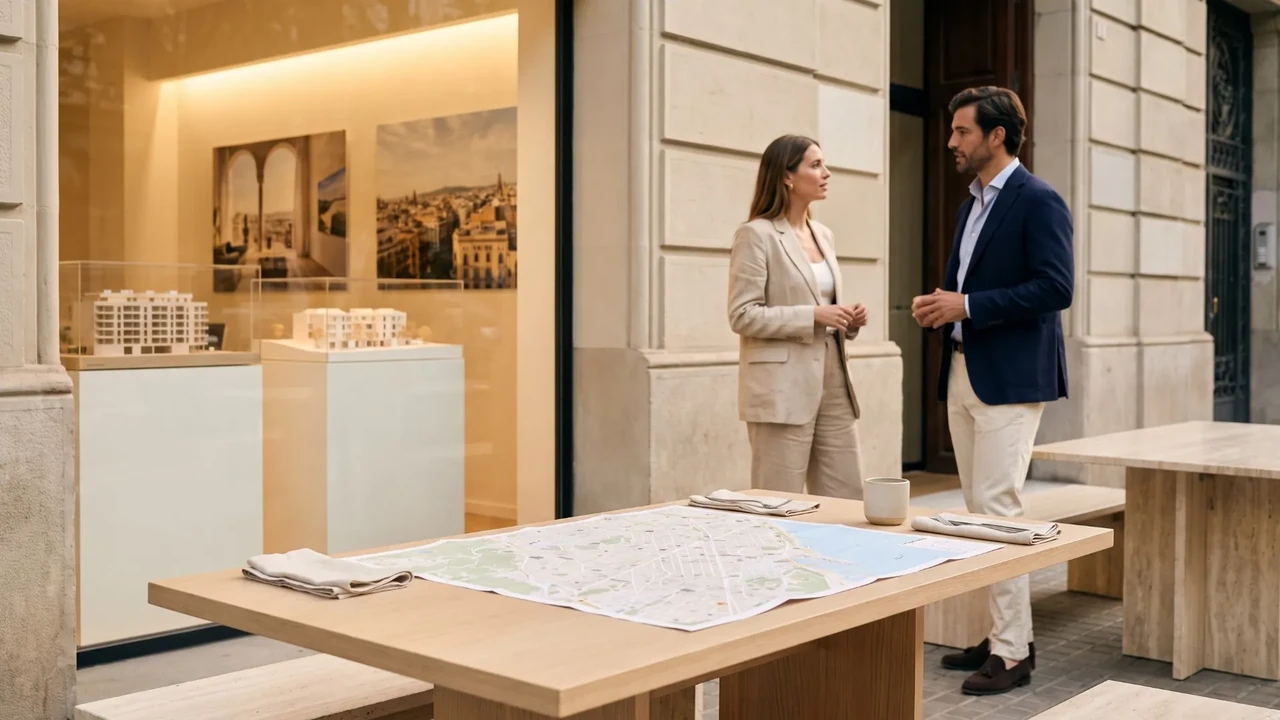
Neighbourhood real estate agency with a map of the area in the foreground
In this article 8 sections
  1. What local SEO for real estate agencies is
  2. Why it's vital for your agency
  3. How local real estate SEO works
  4. Key factors in local SEO for real estate agencies
  5. Strategies for winning clients with local SEO
  6. Tools to boost your local real estate SEO
  7. In summary
  8. Frequently asked questions

What local SEO for real estate agencies is

Local SEO for real estate agencies is the strategy that focuses all your digital work on your location. From setting up your Google Business Profile properly to using on your website the words people search with in your area, the goal is for anyone looking for a property in your area to find you first.

With a well-executed strategy, your agency can overtake the portals and win quality clients without spending large sums on advertising. It's what we work on every month in our real estate SEO for luxury real estate agencies.

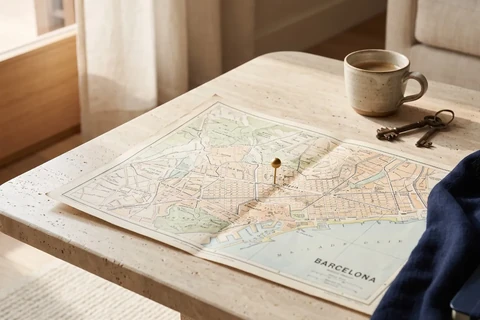
Map of a neighbourhood with a brass pin and a set of keys

Why it's vital for your agency

Relying only on property portals limits your independence and dilutes your brand. Local SEO brings visits to your website from people who are genuinely searching in your area, builds client trust and consolidates your reputation in your city or neighbourhood.

Not appearing in local searches is like not being in the shop window where buyers are looking.

Being among the top results on Google Maps greatly increases the chances that a client will call you before any other agency. That's what we work on with MG Grupo Inmobiliario in Barcelona's upper neighbourhoods.

Agent greeting a shopkeeper in their neighbourhood

How local real estate SEO works

When someone searches for “real estate agency near me” or “flat for sale in Sant Cugat”, Google shows a map with the top results: the local pack. It's the first thing they see, before any website.

What decides who appears on the map

  • Your Google Business Profile listing, complete and well maintained.
  • Reviews: how many you have, what they say and how you respond.
  • The proximity of your office to the person searching.

Person searching on their phone in front of several offices

Being near the top of that map improves your visibility and brings you more enquiries from your area.

Key factors in local SEO for real estate agencies

A local real estate SEO strategy that works combines four pieces:

The four pieces of local SEO
FactorWhat to doWhat you get
Google Business ProfileAddress, phone number, opening hours, up-to-date photos and regular postsThe foundation for appearing on the map in your area
Reviews and reputationAsk for a rating when you close each sale and reply to every reviewTrust and a better position on Google
Local content on your websiteMention your area naturally in titles, descriptions and property listingsGoogle understands where you're relevant
Local directories and mediaWork with associations and media, take part in neighbourhood eventsAuthority and visibility in your city

Strategies for winning clients with local SEO

Three levers that are in your hands and reinforce each other:

Choose the right words for your area

The more specific they are, the more qualified the visits will be. “Flat for sale in Chamberí” attracts people with a real intention to buy in that particular area.

Street in Chamberí with stately buildings

Create content about your neighbourhood

Neighbourhood guides, nearby services, transport or schools: that content positions your agency as the expert and builds trust before the client calls you.

Get links from your city

Links from local media and associations strengthen your position and show Google that your agency is an active part of the community.

Printed neighbourhood guide lying open on a café table

Tools to boost your local real estate SEO

Improving means measuring. These are the tools we recommend:

  • Google Business Profile and Google Analytics: how your listing is performing and how many visits reach your website.
  • Semrush or Ahrefs: what people search for in your area and what your competitors are doing.
  • A good CRM: so that no enquiry that comes in through Google goes unanswered. You can read our comparison of real estate CRMs in Spain.

In summary

Local real estate SEO sets your agency apart in your city, attracts qualified clients and reduces your dependence on the portals. With a well-maintained Google listing, well-managed reviews and content that names your area, your website becomes your best tool for winning clients and your agency becomes the go-to name in the area.

Lluís Jiménez

Written by

Head of SEO at Landing Agency

From senior technical SEO to Landing's director of operations. Back leading SEO so that your agency is the first in its city.

See their profile and all their articles

Keep reading

All articles
SEO

Real estate link building

Getting other important websites to talk about your real estate agency and link to it: that's how Google recognises it as an authority and moves it up the search results.

Irantzu Dondiz · 6 min read
SEO

How to set up Google Search Console

Google Search Console is the foundation of any SEO strategy. Here's how to set it up properly, step by step.

Javier García · 6 min read

Frequently asked questions

  • It's working on your online presence so that your agency appears when someone searches for a real estate agency or a home in your area: on Google Maps, in the search results and in AI answers. People who search “near me” or by neighbourhood are usually close to making a decision, and that increases your chances of closing sales.

  • The sensible thing is to combine both, but local SEO gives you what the portal doesn't: visits to your own website and enquiries that are yours, without depending on their price rises. What's more, on Google Maps you mainly compete with the agencies in your area, not with the portals, and there an agency with a good listing and good reviews can overtake bigger ones.

  • Quite a lot: Google acknowledges that the number of reviews and their rating influence your position on the map, and they're also the first thing people look at when comparing agencies before calling you. Receiving them steadily and replying to all of them matters more than piling them up all at once. We explain how to ask for them without breaking Google's rules in our guide to Google My Business for real estate agencies.

  • You don't need one to appear on the map, but you do to make the most of it. When local SEO starts bringing in calls and form submissions, a real estate CRM logs each contact with its source, reminds you to follow up and lets you see what Google has brought you. Without one, it's easy for an enquiry to go unanswered. You can read our comparison of real estate CRMs in Spain.

  • The competitors who do will take the clients in your area. And the longer they stay at the top, the more reviews and links from your area they'll build up and the harder it will be for you to catch them. Only a handful of listings show on the map: if yours isn't among them, people searching in your area call another agency.

  • According to Google Business Profile's own help pages, three things: relevance (whether your listing matches what's being searched for), distance (how close you are to the person searching or to the area they name) and prominence (how well known your agency is, based on its reviews, links, mentions and the strength of its website). You can't control distance; the other two, you can.

  • It's the block with a map that Google shows among the top results when a search has local intent, such as “real estate agency in Sarrià” or “real estate agency near me”. It usually shows three listings, and to see the rest you have to open the full map. That's why local SEO is measured area by area: at how many points in your area you appear among those three, not just on the street where your office is.

  • On the map, hardly at all: Google places your listing at the real address where you serve your clients, and a virtual office or a borrowed address can get your listing suspended. For areas where you don't have an office, the route is different: area pages on your website with their own content, well-crafted property listings and links from media based there. With that, you compete in Google's regular results.

  • First, search for your agency's name: if the listing doesn't show up, check that it's verified and hasn't been suspended. If it shows up for your name but not when you search for “real estate agency” in your area, review the primary category, check that the address and phone number match your website, and look at the photos and reviews. And search from several points in your area: the map changes depending on where the searcher is.

The Landing Agency team in the Barcelona office

Put your website to the test
and see where you lose clients

Check my website